Fuvahmulah is unlike anywhere else in the Maldives — a single island that forms an entire atoll of its own, sitting alone in the open Indian Ocean just south of the Equator, between the great atolls of Huvadhoo and Addu. Roughly 5 km long and 1 km wide, it has no surrounding ring of islets and no calm lagoon; instead it drops straight into deep blue water, which is exactly why it has become one of the planet's most extraordinary dive destinations. Here you can reliably swim with tiger sharks year-round, encounter pelagic thresher sharks and oceanic manta rays, and feel the raw, oceanic energy of an island that faces the sea on every side.
For Indian travellers, Fuvahmulah is the Maldives at its wildest and most distinctive. It is a green, fertile, surprisingly large island for the country — home to two rare freshwater lakes, Bandaara Kilhi and Dhadimagi Kilhi, fringed with reeds and wetland birds, and to lush farmland that grows the famous Fuvahmulah mangoes and pineapples found nowhere else in such abundance. Its beaches are unusual too: instead of fine white sand and a sheltered lagoon, you get dramatic, pebbly and sandy shores like Thoondu beach, with smooth white shingle and powerful surf. This is a destination for divers, nature lovers and travellers who want the real, lived-in Maldives far from the resort crowds.
Fuvahmulah is remote, and that is the point. Most visitors fly in on a short domestic hop from Malé and stay in local guesthouses, diving by day and exploring the island's lakes, wetlands and farms in between. As an inhabited local island, alcohol is not sold here, dress is modest in the community, and life moves to the rhythm of the tides and the call to prayer. Three to five nights suits most divers — enough to dive the tiger shark point several times, hope for thresher sharks and oceanic mantas, and still walk the lakeshores, taste a sun-ripe Fuvahmulah mango and watch the surf roll onto Thoondu at sunset.
Best Time to Visit Fuvahmulah
Sitting almost on the Equator, Fuvahmulah is hot and humid all year, with temperatures of 27–31°C and sea temperatures around 28–30°C. It still follows the Maldives' two monsoons loosely: the dry north-east monsoon (Iruvai), roughly December to April, brings the calmest seas and best visibility, while the south-west monsoon (Hulhangu), May to November, is wetter and choppier. The headline attraction — tiger sharks — is here year-round, so diving never truly stops.
For Indian travelers: Best months for Indian travellers: November to April, when the seas are calmest and underwater visibility is at its best for diving and snorkelling. Tiger sharks are seen all year, but thresher sharks and oceanic manta rays are more frequent at certain times — your dive centre will advise on current conditions. May to November is wetter with bigger swell and surf, lower guesthouse rates, and still excellent diving on calmer days.
Month
High °C
Low °C
Rainfall
Notes
JanIdeal
30°
25°
Moderate
Excellent — dry monsoon, calm seas, great visibility
FebIdeal
31°
25°
Low
Ideal — driest, calmest, best for diving
MarIdeal
31°
26°
Low
Ideal — warm, clear water, superb conditions
AprIdeal
31°
26°
Moderate
Excellent — warm; rains beginning to build
May
31°
26°
Heavy
Wet monsoon; bigger surf, good value
Jun
30°
25°
Heavy
Wettest stretch; swell up but sharks remain
Jul
30°
25°
Moderate
Showery; diving good on calmer days
Aug
30°
25°
Moderate
Warm, wet; lively seas
Sep
30°
25°
Heavy
Rainy; green-season value
Oct
30°
25°
Heavy
Showers easing toward month end
NovIdeal
30°
25°
Moderate
Improving — seas calming, conditions returning
DecIdeal
30°
25°
Moderate
Dry monsoon returns — calm, clear, popular
All temperature ranges are approximate. Fuvahmulah's weather can vary year to year.
How to Reach Fuvahmulah from India
Fly into Fuvahmulah Airport (FVM) — domestic; reached via Velana International (MLE)
(FVM).
Fuvahmulah has its own domestic airport (FVM). International travellers fly into Velana International Airport (MLE) near Malé, then take a domestic flight south to Fuvahmulah — around 1.5 hours. There is no seaplane or speedboat option from Malé; the island is simply too far south. The domestic flight is the standard, comfortable way in.
Flight Routes
Delhi (DEL)
via Direct to Malé (MLE), then domestic to Fuvahmulah (FVM)
IndiGo, Air India, Maldivian (domestic)
Total: ~4.5 hrs to Malé + 1.5 hr domestic
Mumbai (BOM)
via Direct to Malé, then domestic to FVM
IndiGo, Air India, Maldivian (domestic)
Total: ~3.5 hrs to Malé + 1.5 hr domestic
Bengaluru / Hyderabad
via Direct or one-stop to Malé, then domestic to FVM
IndiGo, Air India Express, Maldivian
Total: ~3.5–4 hrs to Malé + domestic
Kochi / Chennai
via Direct to Malé, then domestic to FVM
IndiGo, Air India Express, Maldivian
Total: ~1.5–4 hrs to Malé + domestic
Typical fare: Round-trip economy fares to Malé from India typically run ₹25,000–₹55,000. The domestic Malé–Fuvahmulah return flight is an additional ₹12,000–₹20,000 depending on season. We package the international and domestic legs together for the best value.
Airport to City Transfers
Mode
Cost (approx.)
Time
Notes
Domestic flight Malé → Fuvahmulah
₹12,000–₹20,000 return
~1.5 hrs
The only practical way to reach the island. We book this with your international tickets.
Guesthouse pickup (FVM → hotel)
often included
10–20 min
The airport is on the island; most guesthouses include a transfer. We confirm it for you.
Local taxi / van
₹300–₹700
10–20 min
Short hops across the island from the airport to your guesthouse.
Addu Atoll connection
varies
short hop
For travellers combining Fuvahmulah with Addu Atoll further south.
Visa: The Maldives grants a free 30-day visa on arrival to all nationalities, including Indian passport holders — no advance e-visa is needed. Carry a passport valid for at least six months, a confirmed guesthouse booking and an onward/return ticket, and complete the IMUGA online arrival card within 96 hours before you fly. No separate permit is needed for Fuvahmulah. We assist all our travellers.
All prices are approximate (2026). Confirm with us before booking.
Top Attractions in Fuvahmulah
1. Tiger Shark Dive (Tiger Harbour)
₹4,000–₹7,000 per dive (certified)Daily, scheduled by the dive centres⏱ Half day per dive trip
The reason most divers come to Fuvahmulah — and the experience that has made the island world-famous. At the so-called Tiger Harbour and nearby dive sites, large tiger sharks gather year-round in the deep water off the reef. Experienced guides run carefully managed dives where you kneel on the sandy bottom and watch these magnificent predators glide past, often within metres. It is widely regarded as the most reliable tiger shark diving on Earth.
This is a serious dive for certified, reasonably experienced divers — listen closely to the briefing and follow the guides exactly. Tiger sharks are present all year, so there is no "off season". Book through a reputable local dive centre that follows strict safety protocols. Bring your certification card and logbook.
2. Thresher Shark Dive
₹4,000–₹7,000 per diveEarly-morning dives⏱ Half day
Fuvahmulah is one of very few places in the Maldives — and the world — where you can encounter pelagic thresher sharks, instantly recognisable by their enormous scythe-like tails. These shy, deep-water sharks come up to be cleaned at certain reef sites, usually in the early morning, giving patient divers a chance to watch a genuinely rare ocean predator.
Threshers are most often seen on dawn dives, so be ready for an early start. They are deep-water and unpredictable, so sightings are never guaranteed — but Fuvahmulah offers some of the best odds anywhere. A good suit and dive computer help on the deeper profiles.
3. Oceanic Manta Ray Dive
₹4,000–₹7,000 per diveScheduled dives⏱ Half day
Beyond the sharks, Fuvahmulah's open-ocean setting attracts the giant oceanic manta ray — larger and rarer than the reef mantas seen elsewhere in the Maldives. With wingspans that can exceed five metres, these animals cruise the deep blue and visit cleaning stations off the island, offering an unforgettable close encounter for divers.
Oceanic mantas are pelagic and seasonal, so ask your dive centre when conditions are favourable. The same trips often turn up other big animals — silvertip and grey reef sharks, eagle rays, and pelagic fish. Keep a calm, neutral presence in the water for the best encounters.
4. Bandaara Kilhi (Freshwater Lake)
FreeDaylight; dawn and dusk best⏱ 1–2 hours
One of Fuvahmulah's two rare freshwater lakes — a thing almost unheard of on a Maldivian island. Bandaara Kilhi is a tranquil, reed-fringed wetland in the north of the island, surrounded by lush greenery and alive with herons, moorhens and migratory birds. It is a peaceful, otherworldly contrast to the ocean that surrounds the rest of the island.
Visit early morning or late afternoon for birdlife and soft light. There are walking paths and viewpoints around the wetland; bring insect repellent. The lakes are sacred to local culture and ecologically protected — admire them without disturbing the reeds or wildlife.
5. Dhadimagi Kilhi (Freshwater Lake)
FreeDaylight⏱ 1 hour
The island's second freshwater lake, smaller and quieter than Bandaara Kilhi, ringed by wetland vegetation and farmland. Together the two lakes make Fuvahmulah one of the most ecologically unusual islands in the Maldives, supporting birdlife, frogs and a distinctive freshwater ecosystem found almost nowhere else in the country.
Combine both lakes in a single half-day island tour by bike or local taxi. The lakeshores are good for quiet walks and birdwatching. Keep to the paths and respect the local wetland conservation efforts.
6. Thoondu Beach
FreeDaylight; sunset spectacular⏱ Half day
Fuvahmulah's most famous beach, and one of the most unusual in the Maldives. Instead of fine white sand and a calm lagoon, Thoondu is a long shore of smooth white shingle and pebbles that shift with the seasons, fronted by powerful, open-ocean surf. It is wild, photogenic and a complete contrast to the picture-postcard resort beaches further north.
The surf can be strong and there is no sheltering reef, so take care swimming and heed local advice. Sunset here, with the surf breaking on the white shingle, is one of the island's signature sights. Save swimwear for the beach; dress modestly in the village.
7. Mango & Pineapple Farms
Free to visit; buy fruit cheaplyDaytime⏱ 1 hour
Fuvahmulah's fertile soil and freshwater make it a rare farming island in the Maldives — celebrated nationwide for its sweet mangoes and pineapples, as well as taro, breadfruit and other produce grown across its green interior. Wandering the farmland and tasting a sun-ripened Fuvahmulah mango is a delicious, only-here experience, especially in the mango season around the cooler months.
Ask your guesthouse when the mangoes are in season — Fuvahmulah mangoes are famous across the country and well worth seeking out. Buy fruit directly from local farms or roadside stalls at a fraction of city prices. The green farmland also makes a lovely backdrop for a cycle ride.
8. Scuba & Snorkelling Reefs
Snorkel trip ₹1,500–₹3,000; dives from ₹4,000Daily⏱ Half day
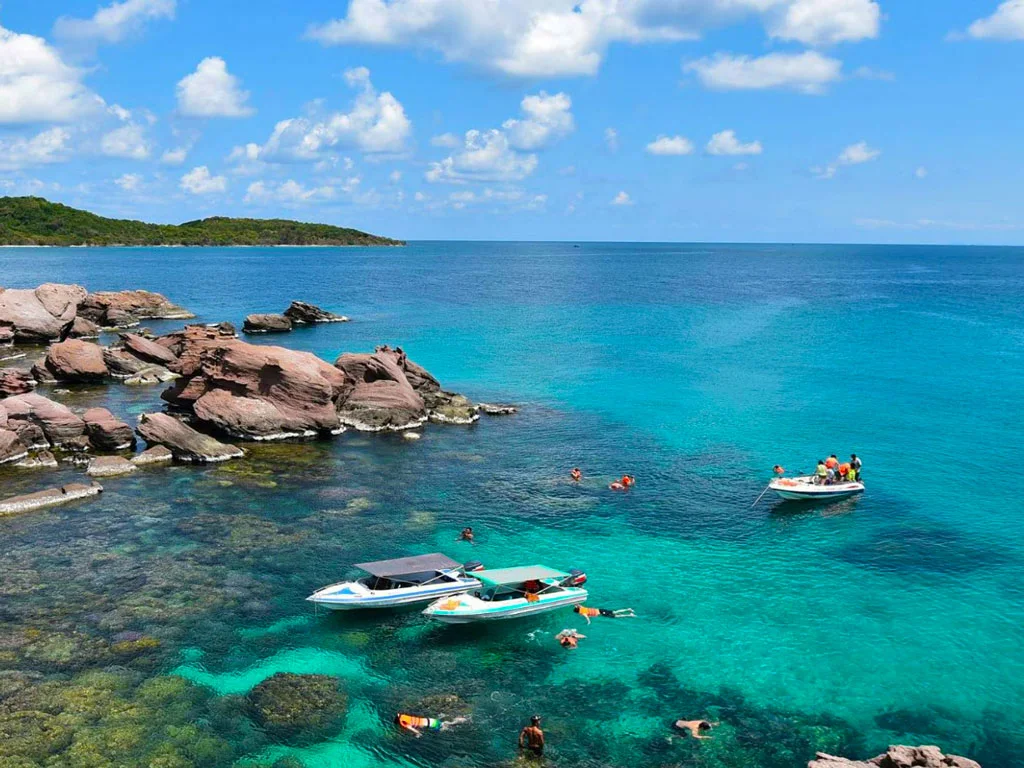
Even away from the big-animal dives, Fuvahmulah's reefs are rich and dramatic, dropping quickly into deep water. Snorkellers and less-experienced divers can explore coral gardens busy with reef fish, turtles, moray eels and rays, while the island's position in the open ocean means surprise encounters with bigger pelagic species are always possible.
Because there is no sheltered lagoon, snorkelling is best on calmer dry-season days and from a boat with a guide. Beginners can do guided snorkel trips or a try-dive before tackling the famous shark sites. Reef-safe sunscreen and a rash vest are essential.
9. Island Cycle & Wetland Tour
Bike hire ₹300–₹600/dayDaytime⏱ Half day
Fuvahmulah is large and green enough to explore properly on two wheels. A cycle tour links the two freshwater lakes, the farmland, the wetlands and the dramatic ocean beaches, passing through the island's villages and giving a real sense of everyday life on this remote one-island atoll.
Roads are quiet and mostly flat — easy cycling for all levels. Combine the lakes, Thoondu beach and a farm stop in one relaxed half-day loop. Carry water and sun protection; there is little shade on the open stretches.
10. Village & Cultural Walk
FreeAnytime; mornings and evenings best⏱ 1–2 hours
Fuvahmulah has a strong, distinct local identity — its own dialect of Dhivehi, its own customs, and an old, settled community spread across several traditional districts. A walk through the villages reveals coral-stone houses, neighbourhood mosques, small shops and the unhurried pace of an island that has lived by farming and fishing for centuries.
Dress modestly and greet people warmly — Fuvahmulah is welcoming but conservative. Ask before photographing residents. Sunset, when families gather and the heat eases, is a lovely time to wander the lanes.
11. Surfing at Thoondu
Free (bring/hire board)Daylight, swell-dependent⏱ Half day
The same open-ocean exposure that makes Thoondu's beach so dramatic also brings surf to Fuvahmulah. While the island is not a developed surf resort like North Malé's breaks, experienced surfers can find waves off the island, especially during the south-west monsoon swell, in an utterly uncrowded setting.
This is for experienced, self-sufficient surfers — there are no lifeguards and the ocean is powerful. Check conditions with locals, and treat the strong currents and lack of a sheltering reef with respect. Best swell tends to come in the wetter months.
All prices are approximate (2026). Confirm with us before booking.
Famous Food in Fuvahmulah
Fuvahmulah's food is hearty, home-style Maldivian cooking with a farming island's twist — fresh-caught tuna and reef fish in every form, plus the island's own celebrated mangoes, pineapples, taro and breadfruit. Meals are eaten mostly in guesthouses and small local cafés, and the produce is some of the freshest in the country.
1
Mas Huni & Roshi₹150–₹350
The classic Maldivian breakfast — shredded smoked tuna mixed with grated coconut, onion, chilli and lime, eaten with warm roshi flatbread. A perfect light start before an early shark dive.
Best at: Any guesthouse breakfast; local cafés in the villages
2
Garudhiya₹150–₹300
A clear, fragrant tuna broth served over rice with lime, chilli, onion and a spoon of rihaakuru. The everyday comfort food of the island — simple and deeply satisfying.
Best at: Family-run cafés across Fuvahmulah
3
Mas Riha (Tuna Curry)₹250–₹450
Fresh tuna simmered in a coconut-milk curry with curry leaves and Maldivian spices, served with rice or roshi. A staple of guesthouse dinners.
Best at: Guesthouse kitchens and village restaurants
4
Fihunu Mas (Grilled Reef Fish)₹350–₹700
Whole reef fish or tuna steaks marinated in chilli paste and grilled over coals — smoky, fresh and often eaten by the shore at sunset.
Best at: Beach and guesthouse BBQ nights
5
Fuvahmulah Mangoes₹50–₹200
The island's most famous produce — sweet, fragrant mangoes celebrated across the Maldives. Eaten fresh, blended into juices or used in local sweets, especially in the cooler mango season.
Best at: Roadside stalls, farms and markets
6
Fresh Pineapple & Tropical Fruit₹50–₹150
Fuvahmulah's fertile soil yields juicy pineapples, bananas and other tropical fruit far fresher than the imported produce found in city shops. A daily treat between dives.
Best at: Local farms and stalls
7
Bambukeyo & Ala (Breadfruit & Taro)₹100–₹250
Starchy island staples grown on Fuvahmulah's farmland — breadfruit and taro cooked in coconut milk or fried as chips, a genuinely local side rarely found on resort menus.
Best at: Home-style guesthouse meals
8
Bajiya & Short Eats (Hedhikaa)₹50–₹150
The Maldivian tea-time table — bajiya, gulha and kavaabu made with smoked fish and coconut, eaten with sweet tea. Cheap, moreish and everywhere.
Best at: Local hotaa (tea shops)
9
Saagu Bondibai (Sago Pudding)₹100–₹200
A warm, sweet sago-and-coconut-milk pudding scented with rosewater — the gentle Maldivian dessert that finishes a curry dinner.
Best at: Guesthouse dinners and cafés
🌿 Vegetarian & Vegan Travelers
Vegetarians do well on Fuvahmulah thanks to the island's farming heritage — roshi with vegetable and dhal curries, rice, taro, breadfruit, salads and an abundance of fresh fruit, including the famous mangoes and pineapples. Tell your guesthouse in advance and kitchens will happily prepare vegetarian and vegan meals.
Guesthouse kitchens — vegetable curries, dhal, roshi and fresh-fruit plates on request
Local cafés — roshi, rice and vegetable curries at island prices
Village hotaa (tea shops) — vegetarian short eats with sweet tea
Farm and roadside stalls — fresh mango, pineapple and tropical fruit
Arrange vegetarian packed meals for full diving days with your guesthouse
🍛
Indian Food Near Fuvahmulah
Looking for Indian food?
Fuvahmulah
has 1–2 verified Indian restaurants
— dal, paneer, biryani, vegetarian & Jain options covered.
All prices are approximate (2026). Confirm with us before booking.
Markets & Shopping
Local Produce Stalls
Roadside and village stalls selling Fuvahmulah's famous mangoes and pineapples, plus taro, breadfruit, bananas and vegetables grown on the island — the freshest produce in the Maldives, at local prices.
Hours: Daytime ·
Best for: Mangoes, pineapples, fresh island fruit and vegetables
General Stores
Shops scattered through the villages stocking groceries, water, snacks, SIM cards and everyday essentials. The practical place for supplies between dives.
Hours: 7 AM – 11 PM ·
Best for: Water, snacks, SIM top-ups, daily essentials
Fish Harbour
The working harbour where fishing dhonis land tuna and reef fish. Not a tourist market but a glimpse of the island's livelihood and the source of dinner.
Hours: Afternoon landings ·
Best for: Local atmosphere, photography, fresh fish
Dive Centre Shops
The island's dive centres double as booking desks and small shops for gear, rash vests and dive accessories — the hub of Fuvahmulah's underwater scene.
Hours: 8 AM – 8 PM ·
Best for: Booking dives, gear hire, dive essentials
Craft & Souvenir Sellers
A handful of sellers offer Maldivian crafts and shark-themed souvenirs — lacquered boxes, woven mats and locally made keepsakes.
Hours: 9 AM – 9 PM ·
Best for: Maldivian handicrafts, dive souvenirs, gifts
💡 Bargaining Tips
Produce and general stores have fixed, fair island prices — there is little haggling. Souvenirs may flex a little if you buy several. Dive prices are set per centre, so it is worth comparing two or three operators for packages and multi-dive deals.
What to Buy
Fresh Fuvahmulah mangoes and pineapples (in season), local fruit and preserves, lacquered wooden Maldivian boxes, woven palm-leaf mats, shark-themed dive souvenirs and reef-safe sunscreen. Avoid buying anything made from coral, turtle shell or protected species.
Nightlife in Fuvahmulah
Fuvahmulah is a quiet, conservative local island, and as an inhabited Muslim community it sells no alcohol. Evenings here are gentle — early dinners after a day of diving, stargazing, a stroll along the shore or the lakes, and good conversation. Divers tend to turn in early for the next dawn dive.
Thoondu Beach at Sunset
The island gathers at Thoondu as the sun drops behind the surf breaking on the white shingle — Fuvahmulah's most beautiful evening moment.
Dramatic, free, surf and sunset
Guesthouse Dinners
Home-cooked Maldivian dinners — fresh tuna, curries, roshi and island fruit — eaten with fellow divers swapping the day's shark stories.
Social, home-style, alcohol-free
Lakeside Evening Walks
Quiet dusk strolls around Bandaara Kilhi or Dhadimagi Kilhi, when the wetland birds settle and the air cools.
Peaceful, nature, romantic
Stargazing
With almost no light pollution and an Equatorial sky, the stars over Fuvahmulah are brilliant. Find a dark stretch of beach or farmland and look up.
Quiet, cosmic, free
Tea Shops (Hotaa)
Local tea shops stay busy in the evening, serving short eats and sweet black tea — the island's real social heart.
Local, casual, alcohol-free
Boduberu Cultural Night
Occasionally guesthouses or the community host boduberu — traditional Maldivian drumming and dance — a lively window into Fuvahmulah culture.
Traditional drumming, festive, cultural
Note for Indian travelers: Fuvahmulah is extremely safe and calm, but remote and conservative. There is no nightlife in the city sense and no alcohol — for a drink you would need a liveaboard or to travel elsewhere. Embrace the quiet: early nights, brilliant stars, and the satisfying tiredness that follows a day in the water with sharks.
Day Trips & Nearby
Fuvahmulah's greatest strength as a base is its extraordinary day-trip range. Within a few hours you can be on a UNESCO bay, in a misty mountain village, or gliding through limestone canyons by rowing boat.
Tiger Shark Dive
Short boat ride from the harbour
Half day
The island's signature experience — a guided dive with tiger sharks in the deep water off the reef, possible year-round.
Two Lakes & Wetlands Tour
Across the island
Half day
Visit both Bandaara Kilhi and Dhadimagi Kilhi, the island's rare freshwater lakes, with birdwatching and lakeside walks.
Thoondu Beach & Farms
Northern island
Half day
The dramatic white-shingle Thoondu beach combined with a stop at the famous mango and pineapple farms.
Thresher & Oceanic Manta Dives
Offshore dive sites
Half day (early start)
Dawn dives in search of rare pelagic thresher sharks and giant oceanic manta rays — among the world's best chances for both.
Addu Atoll Extension
Short hop further south
1–3 nights
Many divers pair Fuvahmulah with neighbouring Addu Atoll for more reefs, wartime wrecks and the southern Maldives' second urban area.
A relaxed cycle through villages, farmland, wetlands and ocean beaches — the best way to feel the rhythm of this one-island atoll.
Where to Stay in Fuvahmulah
Fuvahmulah's neighborhoods each have a distinct personality. Choosing the right base changes the texture of your entire trip.
Near the Harbour & Dive Centres (Best for Divers) Recommended
Guesthouses clustered close to the harbour and main dive centres, so you roll out of bed and onto the boat. The most convenient base for a diving-focused trip. Local guesthouses run $50–$150 a night, usually with breakfast and dive packages.
Best for: Divers, easy boat access, first-timers ·
Noise: Low
Village Guesthouses
Family-run guesthouses set among the island's traditional districts, quieter and more immersed in local life. Authentic, friendly and good value — a short ride from the dive harbour. Typically $40–$100.
Best for: Budget travellers, authentic local life ·
Noise: Quiet
Lakeside & Quiet Districts
Accommodation near the freshwater lakes and green interior, for travellers who want nature and calm over harbour convenience. Peaceful, with easy access to the wetlands and farms.
Best for: Nature lovers, birdwatchers, slow travel ·
Noise: Very quiet
Our recommendation: Divers: a guesthouse near the harbour and dive centres for the easiest boat access. Budget and authenticity: a family-run village guesthouse. Nature lovers: a quieter lakeside district close to the wetlands. We match the base to your priorities and dive plan.
Getting Around Fuvahmulah
Mode
Cost
Best For
Tips
Walking
Free
Within a village district
Pleasant for short hops, but Fuvahmulah is large for a Maldivian island, so you will want wheels to cross it.
Bicycle
₹300–₹600/day
Exploring lakes, farms and beaches
The roads are flat and quiet — cycling is the nicest way to see the whole island at your own pace.
Scooter / motorbike
₹500–₹900/day
Getting around quickly between dive sites and sights
Common on the island; handy for covering distance in the heat. Helmets advised.
Local taxi / van
₹300–₹700
Airport and harbour transfers
Short, inexpensive rides across the island; your guesthouse can call one.
Dive boat
included in dive price
Reaching the tiger shark and pelagic dive sites
All dives leave from the harbour by boat. Booked through the dive centres.
Guesthouse pickup
often included
Airport arrival and departure
Most guesthouses include an airport transfer; we confirm it with your booking.
All prices are approximate (2026). Confirm with us before booking.
Suggested Itineraries
Whether you have a weekend or a week, here are tried-and-tested day-by-day plans for Fuvahmulah and the surrounding region.
Ready to plan your Fuvahmulah trip?
Tell us your travel dates and we'll build a personalised itinerary with hotels, transfers, and experiences — at no extra cost.
Fuvahmulah is the world's most reliable place to dive with tiger sharks, and they are here all year. If big-animal diving is your goal, this is the single best island in the Maldives for it.
For Certified Divers
The shark dives are deep, open-ocean and need a reasonable level of experience. Bring your certification and logbook. Beginners can do a try-dive or guided snorkel first, then build up.
Reached by Domestic Flight
There is no speedboat or seaplane to Fuvahmulah. You fly into Velana (MLE), then take a ~1.5-hour domestic flight south. We package both legs and confirm comfortable connection times.
Two Rare Freshwater Lakes
Bandaara Kilhi and Dhadimagi Kilhi make Fuvahmulah one of the only Maldivian islands with freshwater lakes. They are beautiful, bird-rich and worth a quiet dawn or dusk visit.
🥭
Taste the Famous Mangoes
Fuvahmulah mangoes and pineapples are celebrated across the Maldives. Ask when they are in season and buy fresh from the farms — a only-here treat between dives.
Beaches Are Different Here
Thoondu is white shingle and powerful surf, not a calm white-sand lagoon. It is dramatic and gorgeous, but swim with care — there is no sheltering reef and currents can be strong.
👕
Respect the Local-Island Dress Code
Fuvahmulah is a conservative inhabited island. Dress modestly in the villages — covered shoulders and knees — and save swimwear for the beach and the water.
No Alcohol on the Island
As an inhabited Muslim island, Fuvahmulah sells no alcohol. Evenings are alcohol-free; for a drink you would need a liveaboard. Enjoy fresh juices and the island's famous fruit instead.
Good for Vegetarians
The farming island grows abundant vegetables and fruit. Roshi, dhal and vegetable curries, taro, breadfruit and fresh mango are easy — just tell your guesthouse in advance.
USD & Cards
Dive centres and guesthouses price in US dollars and mostly take cards, though small shops want USD cash. The local currency is the Rufiyaa (MVR), rarely needed by tourists.
Get a Tourist SIM at the Airport
Pick up a Dhiraagu or Ooredoo tourist SIM at Velana, or use an eSIM, so you stay connected on Fuvahmulah and can share those shark photos.
Best Diving Nov–Apr
The dry monsoon brings the calmest seas and clearest water. Sharks are here all year, but November to April gives the most comfortable, reliable diving conditions.
Hire a Bike
Fuvahmulah is large and green — a bicycle is the perfect way to link the lakes, farms and beaches between dives, on quiet, flat roads.
Travel Insurance for Diving
Given the deep, big-animal dives, make sure your travel insurance covers scuba diving. The island is remote, so good cover is sensible.
Power Plugs
The Maldives mainly uses the UK-style Type G three-pin plug. Indian Type D plugs do not fit, so bring a universal adapter.
Common questions from Indian travelers planning a Fuvahmulah trip.
Is Fuvahmulah worth visiting from India?
For divers and nature lovers, absolutely. Fuvahmulah is the world's most reliable tiger shark dive, with thresher sharks, oceanic mantas, two rare freshwater lakes and famous mangoes — a completely different Maldives from the resorts. If your trip is purely about calm-lagoon beaches and overwater villas, it is less suited; but adventurous travellers find it unforgettable.
How many days do I need in Fuvahmulah?
Three to five nights suits most divers — enough to dive the tiger shark point several times, hope for threshers and oceanic mantas, and still explore the lakes, farms and beaches. One or two nights gives a quick taste but limits how much you can dive.
Can I really dive with tiger sharks year-round?
Yes. Tiger sharks are present off Fuvahmulah all year, which is what makes it world-famous. The dives are guided and carefully managed, but they are deep and oceanic, so a reasonable level of diving experience is required.
Is Fuvahmulah safe for Indian travellers?
Very safe on land — it is a calm, friendly, conservative community with very low crime. The main cautions are in the water: respect the strong open-ocean currents, follow dive guides closely, and swim carefully at the surf-fronted beaches.
What is the best time to visit Fuvahmulah from India?
November to April, the dry north-east monsoon, brings the calmest seas and best visibility for diving. Sharks are here all year, so even the wetter May–November season has excellent diving on calmer days, with lower prices and bigger surf.
How do I get to Fuvahmulah?
Fly into Velana International Airport (MLE) near Malé, then take a domestic flight south to Fuvahmulah Airport (FVM) — about 1.5 hours. There is no speedboat or seaplane; the domestic flight is the only practical route. We book both legs together.
Can non-divers enjoy Fuvahmulah?
Yes, though it is primarily a diving island. Non-divers can do guided snorkel trips, walk the two freshwater lakes and wetlands, cycle the green interior, visit the mango and pineapple farms, and watch the surf at Thoondu beach. It suits curious, nature-minded travellers.
What are the freshwater lakes?
Bandaara Kilhi and Dhadimagi Kilhi are two rare freshwater lakes on Fuvahmulah — almost unheard of on a Maldivian island. Reed-fringed and rich in birdlife, they give the island a unique wetland ecosystem and are lovely at dawn and dusk.
Is Fuvahmulah vegetarian-friendly?
Yes. As a farming island it grows abundant vegetables and fruit, so roshi, dhal and vegetable curries, taro, breadfruit, salads and fresh mango and pineapple are all easy. Let your guesthouse know in advance.
Can I drink alcohol on Fuvahmulah?
No. Fuvahmulah is an inhabited Muslim island and sells no alcohol. For a drink you would need a liveaboard or a different kind of trip. Evenings here are alcohol-free and centred on food, fruit, stars and rest.
Should I combine Fuvahmulah with another island?
Many divers pair Fuvahmulah with neighbouring Addu Atoll, a short hop further south, for more reefs, wartime wrecks and the southern Maldives' second urban area. It makes for a rewarding remote-south diving and culture circuit.
Is Fuvahmulah good for a honeymoon?
It is a wilder, more adventurous choice than the classic resort honeymoon — wonderful for couples who love diving, nature and authentic island life. For a pure overwater-villa honeymoon, we would pair a couple of Fuvahmulah dive days with a resort stay elsewhere in the Maldives.
Ready to book your Fuvahmulah holiday?
Our Maldives specialists build complete itineraries — hotels, transfers, guided tours, and e-visa help — with costs quoted in your home currency. Trusted by thousands of Indian travelers.