
Maldives Weather by Month
Month-by-month weather guide to the two monsoons — the dry Iruvai season (Dec–Apr) and the wet Hulhangu season (May–Nov). Know when to go, what to pack, and the best time for beaches, diving and manta season.
Check the Weather →
Monthly Weather Conditions
Select a month and region to see temperatures, rainfall, and travel tips.
Year at a Glance
Click any month to jump to its full weather details above.
Northern AtollsMalé · North Malé Atoll · Baa Atoll · Lhaviyani Atoll
Central AtollsSouth Ari Atoll · Vaavu Atoll · Maafushi · Rasdhoo
Southern AtollsAddu Atoll · Fuvahmulah · Huvadhoo (Gaafu) Atoll
Best Time to Visit Maldives
A quick-reference guide — find the ideal window for your priorities.
For the Whole Maldives
December – April
The dry north-east monsoon (Iruvai) is peak season across every atoll — sunny skies, calm seas, low rainfall and the best underwater visibility. March and April are the hottest and driest. Expect the highest prices and biggest crowds.
For Value & Fewer Crowds
May – November
The wet south-west monsoon (Hulhangu) brings lower prices and quieter islands. Rain usually comes as short, heavy showers between sunny spells, and warm 30°C days continue. Great for surfers and budget-conscious travellers.
For Diving Visibility
December – April
The dry season delivers the clearest water and calmest seas, ideal for diving and snorkelling across all atolls — from Vaavu\'s channels to Addu\'s wrecks and Fuvahmulah\'s tiger sharks. Visibility is at its best.
For Manta Rays (Hanifaru, Baa)
May – November
During the wet monsoon, plankton blooms draw huge numbers of manta rays — and whale sharks — to Hanifaru Bay in Baa Atoll. Sightings peak around the middle of the season. One of the planet\'s great marine-life spectacles.
For Whale Sharks (South Ari)
Year-round
Whale sharks cruise South Ari Atoll all year, so they can be snorkelled in any season. Pair them with the dry months (December–April) for the calmest seas and clearest water, or visit in the green season for lower prices.
For Surfing
May – October
The south-west monsoon sends consistent swell to the Maldives\' reef breaks in North Malé, Central and Southern atolls. Wave season runs roughly May to October, with the cleanest, most consistent surf around the middle of that window.
Weather Across the Maldives' Atolls
The Maldives stretches around 870 km north to south, yet shares one tropical, two-monsoon climate — with only subtle differences between the atoll bands.
Northern Atolls
Malé · North Malé Atoll · Baa Atoll · Lhaviyani Atoll
Like all of the Maldives, the northern atolls have two monsoons. The dry north-east monsoon (Iruvai), December to April, brings sunny skies, calm seas and excellent underwater visibility — this is peak season. The wet south-west monsoon (Hulhangu), May to November, is greener and breezier with short heavy showers, but it is also when plankton draws manta rays and whale sharks to Hanifaru Bay in Baa Atoll. Temperatures stay a steady 27–31°C all year.

Central Atolls
South Ari Atoll · Vaavu Atoll · Maafushi · Rasdhoo
The central atolls follow the same two-monsoon rhythm as the rest of the Maldives. The dry north-east monsoon (Iruvai), December to April, is peak season — sunny, calm and superb for diving, with the best underwater visibility. The wet south-west monsoon (Hulhangu), May to November, brings short heavy showers, fresher seas and lower prices. Whale sharks cruise South Ari Atoll year-round, making this band a diver's favourite. Temperatures hold at a steady 27–31°C.
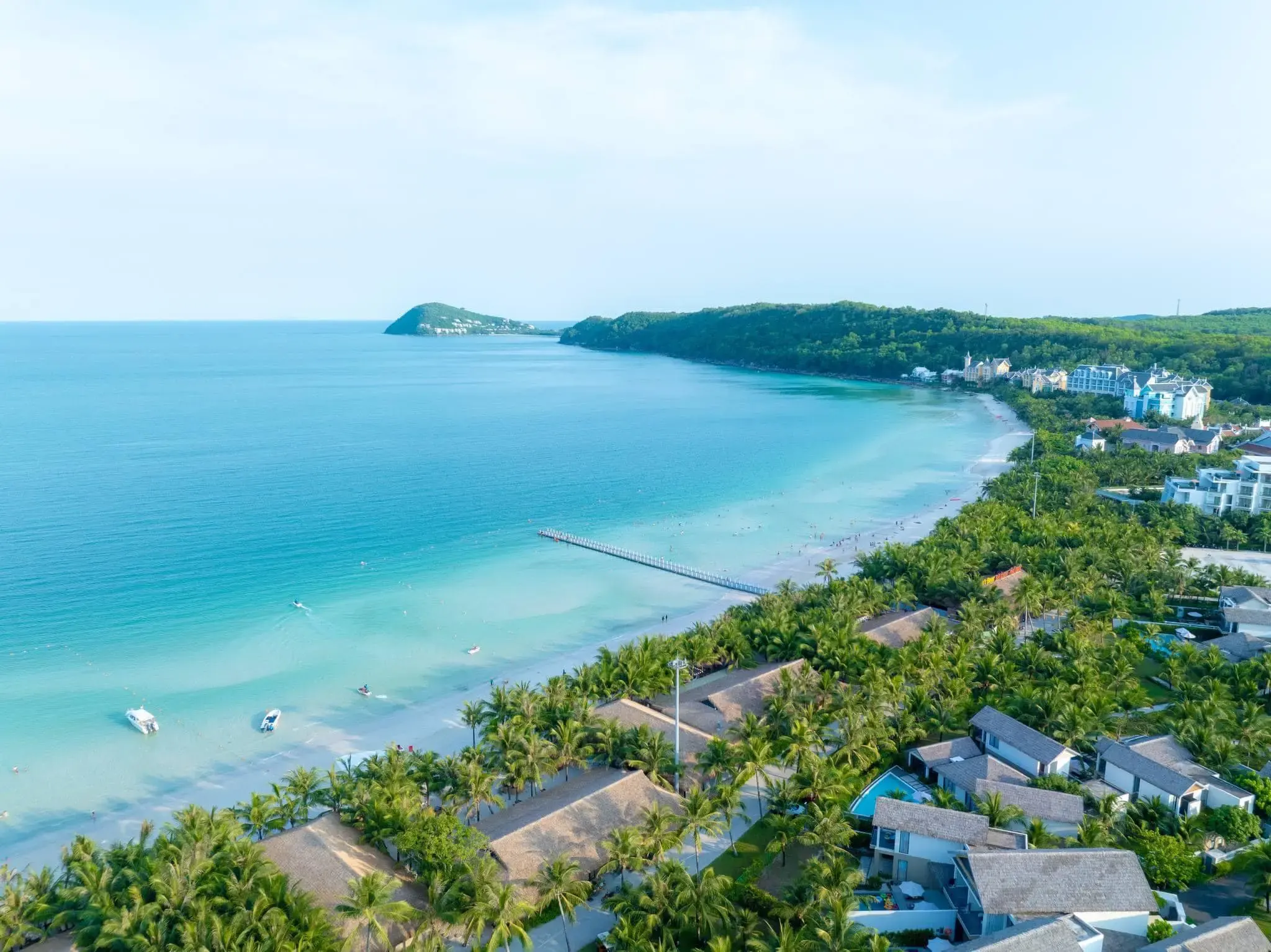
Southern Atolls
Addu Atoll · Fuvahmulah · Huvadhoo (Gaafu) Atoll
The far southern atolls sit close to the Equator, so the two monsoons are a little less sharply defined than further north — the dry season is still December to April and the wet season May to November, but rain is spread a touch more evenly through the year. Seas are warm (27–30°C) and temperatures steady at 27–31°C. The south is a serious diving destination: Fuvahmulah is famous for year-round tiger sharks, and Addu and Huvadhoo offer dramatic channels and wrecks.
Frequently Asked Questions
Everything you need to know about Maldives' weather and the best time to visit.
December to April is the best time to visit. This is the dry north-east monsoon (Iruvai): sunny skies, calm seas, low rainfall and excellent underwater visibility, making it peak season for beaches and diving. March and April are the hottest and driest. The wet season, May to November, is greener, breezier and cheaper, with short heavy showers — and it brings superb manta and whale-shark action.
The Maldives has two monsoons. The dry season, the north-east monsoon known locally as "Iruvai", runs December to April with sunny, calm, low-rainfall conditions — this is peak season. The wet season, the south-west monsoon or "Hulhangu", runs May to November with more rain and wind, but lower prices, fewer crowds, good surf, and plankton blooms that attract manta rays and whale sharks.
Temperatures are remarkably steady all year, typically 27–31°C by day, rarely dropping below 25°C at night, with high humidity. The sea is a warm 27–30°C year-round. Rather than hot and cold seasons, the Maldives has dry and wet seasons — the main difference between months is rainfall, wind and sea conditions, not temperature.
Usually not. Even in the wettest months (around May–June and October–November), rain tends to come as short, heavy showers — often an hour or two — that clear to sunshine, rather than continuous all-day rain. Many wet-season days still have plenty of bright spells. With lower prices and fewer crowds, the wet season can be excellent value.
Whale sharks are seen year-round off South Ari Atoll. Manta rays gather in huge numbers at Hanifaru Bay in Baa Atoll during the south-west monsoon, roughly May to November, when plankton is richest — peak sightings are often around the middle of that window. For the best underwater visibility for general diving, the dry season (December–April) is ideal.
No. The Maldives lies very close to the Equator, outside the main cyclone belt, so it does not get the typhoons or tropical cyclones seen elsewhere. The worst weather is simply heavier rain and stronger winds during the south-west monsoon (May–November), with occasional storms — but no cyclone season as such.
December marks the return of the dry north-east monsoon — sunnier skies, calmer seas and clearer water across all the atolls. It is one of the most popular and most expensive months, especially over Christmas and New Year, so book resorts and seaplane transfers well ahead. Expect warm 30°C days and comfortable, balmy nights.
Pack light, breathable clothing year-round, plus swimwear, a hat, sunglasses and plenty of reef-safe sunscreen. Add a light rain jacket and a dry bag for the wet season. If you plan to visit inhabited local islands, bring modest cover-ups for outside the designated "bikini beaches". Water shoes or reef sandals are handy, and divers should bring or pre-book any specialist gear.
Ready to Book Your Maldives Trip?
Our Maldives specialists help you choose the right season and craft an itinerary around the best weather windows — from Baa Atoll cruises to Maafushi beach days.